Burnham’s EU Outreach Poses Both Peril and Possibility for Scottish Nationalists
A new push for devolution and European ties by the UK prime minister could undercut the SNP while also reviving its independence hopes.
From a 1970s Split to Today’s Devolution Talk
Fifty years ago, a left‑wing faction broke away from Labour to form the Scottish Labour Party (SLP) at the Golden Lion hotel in Stirling. Led by MP Jim Sillars, the new party promised a blend of socialism and home rule, attracting intellectuals such as Tom Nairn, Hamish Henderson and Neal Ascherson.
The SLP struggled to win working‑class support and even staged a violent‑tinged purge of far‑left elements at its October 1976 conference, with one organizer shouting about getting our fucking pit boots on. The party soon collapsed, but its legacy resurfaced in later debates over Scottish self‑determination.
Burnham’s Recent Devolution Pitch
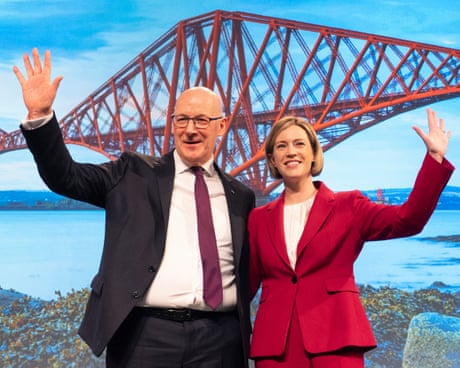
During the SNP conference in Aberdeen, Andy Burnham delivered a speech in Motherwell offering cooperation on further devolution. A subsequent National Economic Council meeting with John Swinney and Welsh First Minister Rhun ap Iorwerth highlighted a shared agenda of devolved power and re‑industrialisation—precisely the platform the SLP advocated in 1976.
European Integration as a Bridge
Sillars’ party had tried to make self‑determination palatable to socialists by embracing the European Economic Community, coining “independence in Europe.” The idea was that free movement of goods, people and services would turn independence into “real equality between self‑governing, co‑dependent nations.”
After the SLP’s demise, Sillars joined the SNP, becoming deputy leader in 1991 and bringing the “independence in Europe” concept with him. The SNP, originally Eurosceptic and campaigning against 1975 EEC membership with the slogan “No voice, no entry,” reversed its stance by the 1990s as the EU began to champion the rights of small nations.
Brexit, Independence and the Hard Border Question
Scotland’s later referendum on independence placed Europe at the centre of the debate. Voters were told an independent Scotland would have to re‑apply to join the EU, prompting many to reject independence to protect their European passports. Two years later, Scotland voted to remain in the EU.
After the UK’s Brexit vote, support for independence briefly surged before falling, as Scots realised a hard border with the rest of the UK—its biggest trading partner—would be inevitable if they re‑joined the EU.
Why Burnham Is Both Threat and Opportunity
Burnham’s vision of a “nostalgic Britain” with regional empowerment directly challenges the SNP’s narrative of an Anglocentric Westminster that marginalises Scotland. His messaging, the article suggests, now rivals that of the SNP.
However, the piece argues that Burnham will likely need to rebuild UK‑EU ties to achieve his broader agenda. If he succeeds, the “bridge” to Europe that Scotland needs for a viable independence sprint could remain intact, even as his domestic agenda undermines the SNP’s political momentum.
Conclusion
Burnham’s EU‑focused devolution push therefore represents a paradox for Scottish nationalists: it threatens the SNP’s appeal while simultaneously preserving the very European connection that underpins the case for independence.






