Climate Scientists Turn to AI for Faster, Smarter Forecasts and Satellite Analysis
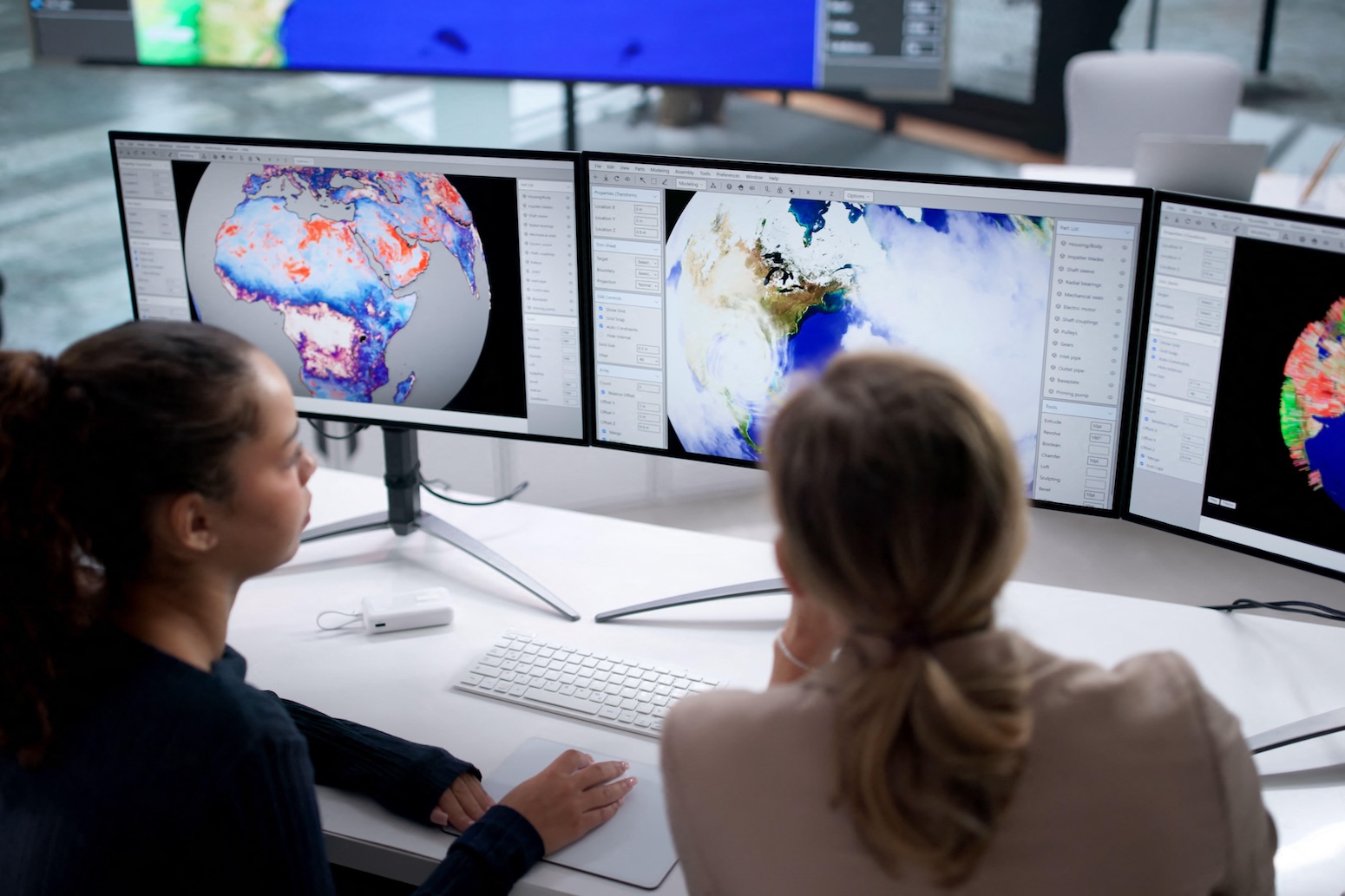
Experts explain how artificial intelligence is reshaping weather prediction, climate modelling, and satellite image interpretation while flagging key risks.
AI in weather and climate forecasting
Dr Doug McNeall, science lead in data‑driven climate modelling at the UK Met Office, says recent AI weather‑prediction models learn from massive weather datasets to predict the next few hours and then feed those predictions back into themselves to produce forecasts up to two weeks ahead. He notes that these models achieve accuracy comparable to traditional numerical models while using far less computing power.
McNeall adds that AI models have so far been built for short‑term forecasts where abundant observational data—such as temperature, rainfall or sea‑ice extent—allows rapid performance evaluation. For longer‑term climate projections, he suggests a blended approach: using AI to emulate or accelerate existing physics‑based models rather than relying solely on data‑driven methods, preserving the physical understanding that underpins confidence in climate projections.
Prof William Collins of the University of East Anglia observes that machine learning has already had an “enormous impact” on numerical weather prediction. He cites the European Centre for Medium‑Range Weather Forecasts, which now includes an AI forecast system alongside its traditional model in official communications. Collins stresses that while AI systems are now competitive with leading numerical forecasts, climate prediction remains a challenge because future climates lack observational records, making data scarcity a central hurdle.
Dr Amirpasha Mozaffari from the Barcelona Supercomputing Centre points out that AI models perform well on typical weather but lag behind physics‑based models for record‑breaking extremes—events most critical for climate‑change adaptation. He identifies hybrid models, physical constraints and new evaluation methods as the main avenues to close this gap.
AI applied to satellite and Earth‑observation data
Dr Stefano Materia, also at the Barcelona Supercomputing Centre, explains that the surge of Earth‑observation satellites has produced a flood of geospatial data. AI now translates raw pixel information into actionable climate intelligence. For example, AI algorithms automatically scan hyperspectral satellite imagery to locate industrial methane leaks worldwide, providing near‑real‑time alerts. The same technology processes thousands of images daily to detect illegal logging, monitor land‑use changes and track glacier retreat far faster than human analysts could.
Dr Clare Eayrs, a polar research scientist at New York University, describes how machine learning is woven throughout the sea‑ice modelling workflow. AI extracts finer details from observations, such as mapping sea‑ice deformation from ship radar and classifying snow‑layer hardness from micropenetrometer profiles. The Ice Net system demonstrated that a deep‑learning model could outperform a leading physical model in seasonal Arctic forecasts, and similar systems now predict sea‑ice concentration, thickness and drift.
Prof Cristiana Stan, vice‑chair of the World Climate Research Programme, notes that AI appears across all major WCRP initiatives. The Weather Prediction Model Intercomparison Project now includes physics‑based, hybrid and AI weather‑prediction models, offering a direct comparison of state‑of‑the‑art systems and aiming to accelerate progress.
Opportunities, misconceptions and risks
Experts agree that AI can make climate risk information more accessible and affordable, but they also warn of several challenges. Over‑reliance on unverified AI results could mislead decision‑makers. The intensive energy consumption of large AI models raises concerns about carbon footprints. Additionally, unequal access to AI tools may exacerbate existing disparities in climate research, leaving less‑resourced institutions behind.
Addressing these issues will require careful integration of AI with physical constraints, transparent evaluation of model performance on unseen extreme events, and policies that ensure broader access to computational resources.
As AI continues to evolve, its role in climate science is expected to expand, offering faster forecasts, richer satellite analyses and new pathways for policy‑relevant climate information, provided the community manages the associated risks responsibly.