Colors of the Moon Reveal a Spectrum of Nighttime Hues
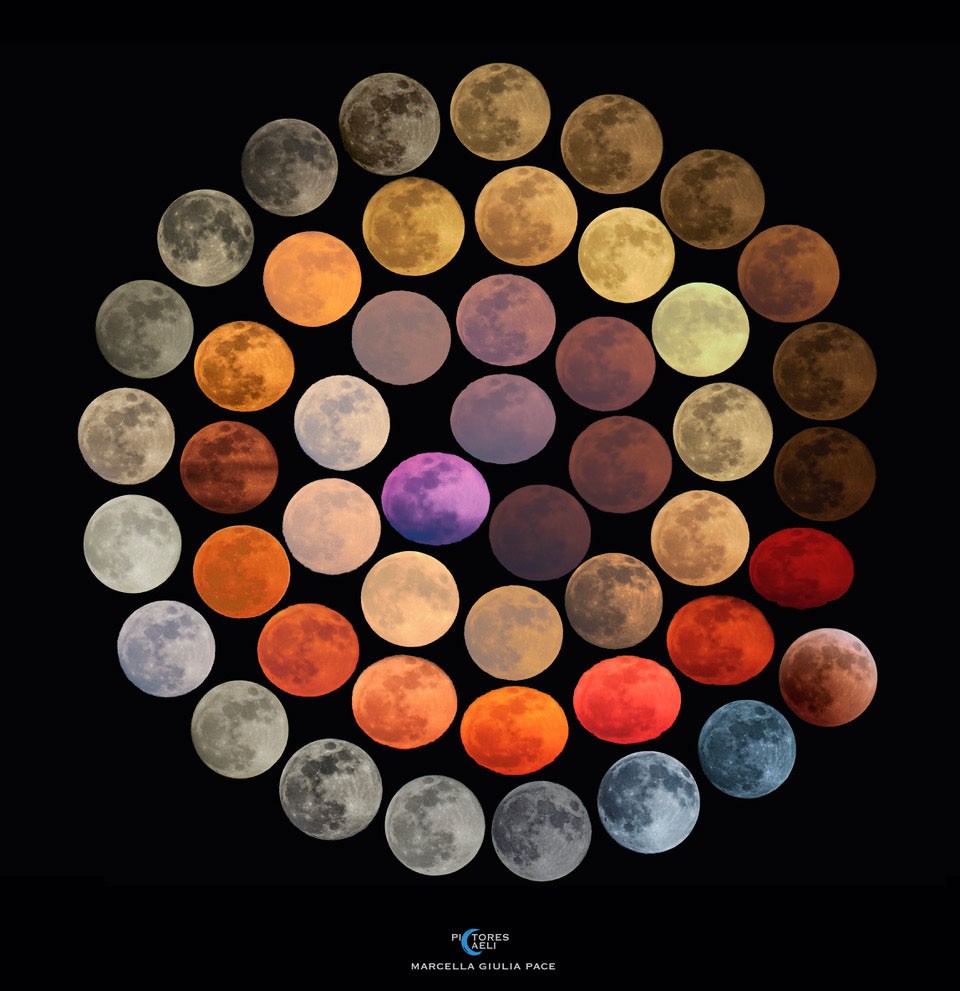
A decade‑long photo series shows how the Moon’s color changes with atmosphere and angle.
Wow! The Moon isn’t just a static gray orb; it can wear a whole palette depending on where and when you look.
What color is the Moon? Outside Earth’s atmosphere the dark Moon, lit by reflected sunlight, looks like a magnificent brown‑tinged gray.
The featured image for today’s Astronomy Picture of the Day showcases a collection of apparent colors of the full Moon as seen from Earth, documented by one astrophotographer over ten years from different locations across Italy.
Red or yellow moons usually signal a view near the horizon. There, a long journey through the atmosphere—sometimes loaded with fine dust—scatters away much of the blue light.
Blue moons are far rarer and can indicate an atmosphere carrying larger dust particles.
The origin of the purple Moon is still unclear; it may result from a combination of several effects.
The final frame captures the total lunar eclipse of July 2018, when the Moon, sitting in Earth’s shadow, glowed a faint red due to light refracted through air around the planet.
Have you ever seen an unusually colorful Moon? Keep looking up, because tomorrow’s picture will take us back to open space.