COP17 Yerevan Biodiversity Conference Delivers Key Finance and Implementation Decisions
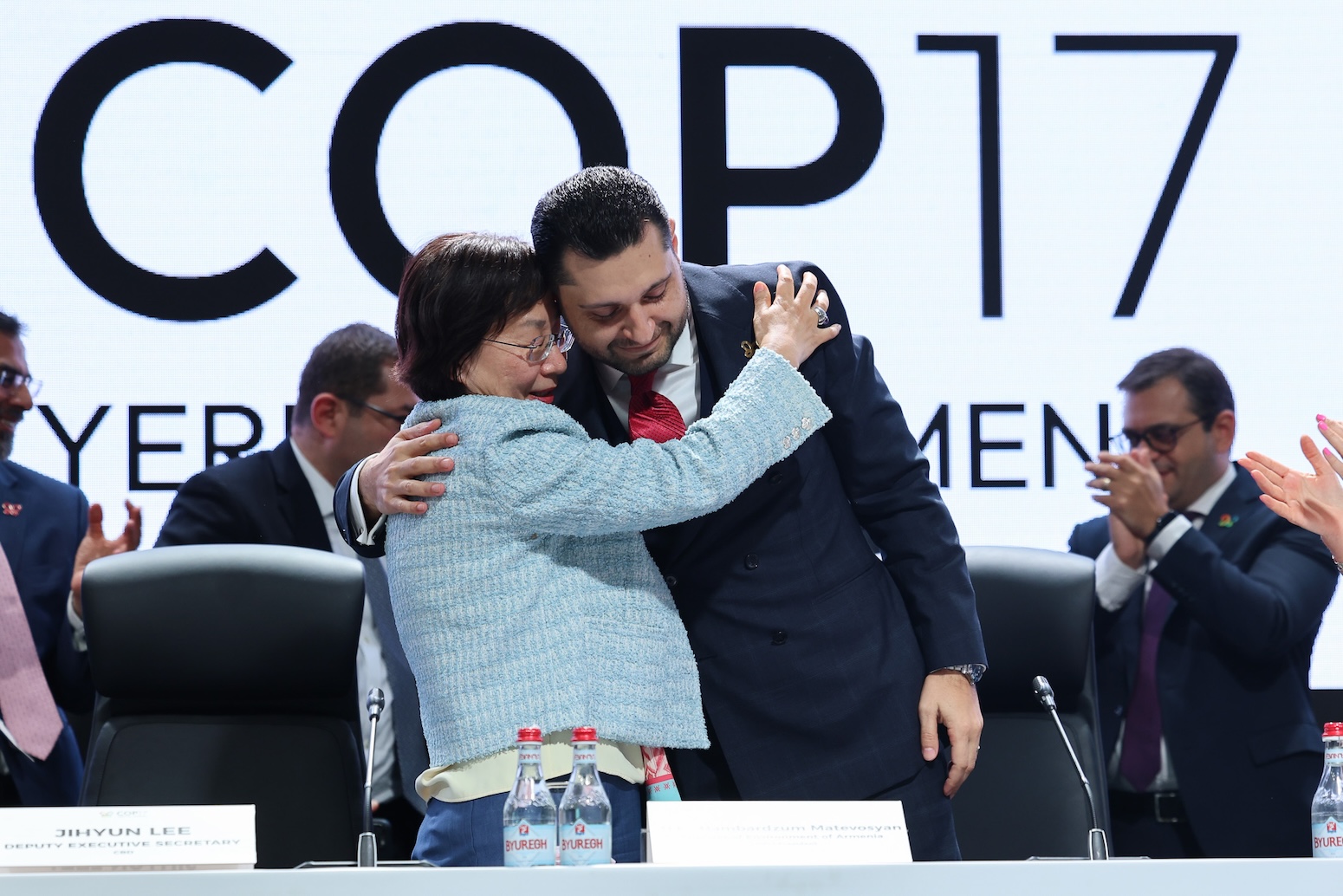
Nations completed the first global review of biodiversity progress and set new finance rules at COP17 in Yerevan.
Global review highlights deep concern
The first “global review” of progress toward reversing nature loss was completed at the COP17 biodiversity talks in Yerevan, Armenia. The review notes with deep concern that, unless action is “rapidly accelerated”, the goal to reverse nature loss and meet a set of 23 targets by 2030 “will not be achieved”. It urges countries to accelerate action, including by “increased ambition in addressing the gaps”.
Finance negotiations and the “contributor base”
Finance dominated the Yerevan talks. The global review documented that developed countries failed to meet their commitment to raise “at least $20bn a year by 2025” for nature, and delegates highlighted a 27% decline in environmental funding for the 2026‑30 period. The second finance task was to decide how to mobilise resources for the next four years to meet the Kunming‑Montreal Global Biodiversity Framework (GBF) goals.
After intense debate, countries accepted a text described by Switzerland as “super, mega‑delicate”. The agreement allows nations that wish to be listed as developed‑country donors to signal interest through bilateral, confidential consultations before COP18 and every alternate COP thereafter. It also set criteria for a new permanent financial mechanism to protect nature after 2030, though the mechanism’s institutional structure will be finalised at COP18.
The push, led by the JUSCANZ bloc of developed countries, to “broaden the contributor base” could add emerging economies such as Qatar, China, Saudi Arabia and India to the list of countries that pay to protect nature. Article 20 of the UN Convention on Biological Diversity states that developed countries “shall provide new and additional financial resources” to developing countries, and the text allows other countries to “voluntarily assume” these obligations, with periodic review of the donor list.
Key statements and reactions
At a press conference on 28 October, Ireland’s nature minister Christopher O’Sullivan, speaking for the EU delegation, said the EU doesn’t want to pull back in terms of contributing…times have changed and there are new realities. Lim Li Ching of the Third World Network called the push for other nations to “assume the obligations” of developed countries “sheer hypocrisy”, arguing that finance should consider historical responsibilities and sovereign debt burdens.
Procedural outcomes and next steps
On 29 October, during a plenary to adopt final texts, Norway’s Gaute Hanssen announced that resource‑mobilisation discussions would move to a smaller “friends of the chair” meeting, facilitated by representatives from Canada and Tunisia. The meeting included Brazil, Canada, Chile, China, the EU, Fiji, Norway, Russia, Switzerland, Saudi Arabia, South Africa and the UK, and would address the most contentious elements of a draft decision that contained 112 brackets of disagreement.
Adoption of major texts and host selection
In the nearly 12‑hour final plenary, countries voted to have Quito, Ecuador, host COP18 nature talks in 2028. All major negotiation texts were signed off, a contrast to COP16 where the Colombian presidency lost quorum and talks had to resume in Rome.
Looking ahead
The Yerevan outcomes mark the halfway point of the “Kunming‑Montreal Global Biodiversity Framework”, the “Paris Agreement for nature” first adopted in 2022 and aimed for full achievement by 2030. The next COP will test whether the expanded contributor base and the forthcoming permanent financial mechanism can close the biodiversity finance gap and move the world toward the 2030 targets.