IceCube spots ultra‑high‑energy neutrinos, dubbed “ghost particles”
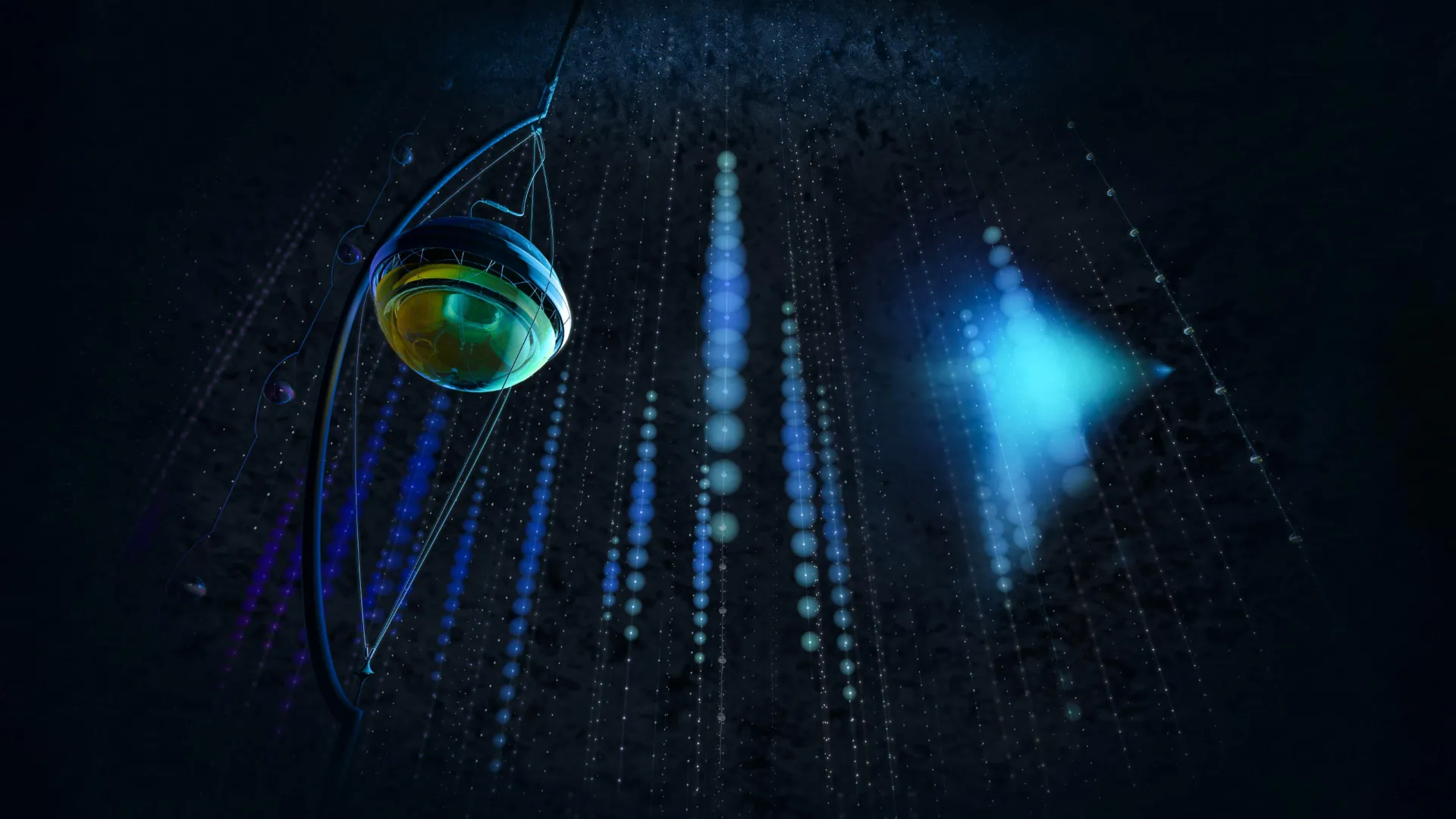
Researchers at the IceCube Observatory have recorded neutrinos with energies billions of times greater than those from the Sun.
What IceCube observed
IceCube has recorded neutrinos whose energy is roughly ten billion times that of solar neutrinos, a scale that far surpasses the particles routinely produced by the Sun. These detections reinforce the idea that such high‑energy neutrinos originate from distant, extreme astrophysical sources.
Why neutrinos matter
Neutrinos belong to the family of elementary particles and come in three types: electron, muon and tau. They carry no electric charge and possess a minuscule mass—estimated to be about ten million times lighter than an electron—though the exact values remain unknown.
Because they interact only via the weak force, which is about twenty orders of magnitude weaker than electromagnetism, neutrinos can traverse vast amounts of matter almost unhindered. “Neutrinos are truly ghost‑like particles,” said George Fuller, a Distinguished Professor of Physics at UC San Diego. “It’s hard to stop them. It’s hard to catch them.”
Detecting the undetectable
Despite their elusive nature, occasional weak‑force interactions cause neutrinos to scatter or be absorbed, providing a fleeting signal for detectors. IceCube, embedded deep within Antarctic ice, uses a lattice of optical sensors to capture the faint flashes of light produced when a neutrino interaction occurs.
Fuller noted that even a lead wall measured in light‑years would not stop a sufficiently energetic neutrino, underscoring their penetrative power.
Scientific recognition
Francis Halzen was awarded the Nobel Prize for “decisive contributions to the IceCube Neutrino Observatory and the discovery of high‑energy neutrinos of astrophysical origin.” His work, alongside collaborators such as Fuller, has highlighted the role of neutrinos as messengers from regions otherwise hidden from conventional telescopes.
Neutrinos in context
Estimates suggest the universe contains an immense number of neutrinos—roughly one billion for every atom—making them one of the most abundant particles known. Approximately one hundred billion of them pass through each square centimeter of a human body every second, largely unnoticed.
From the Sun to distant, unidentified cosmic sources, neutrinos provide a unique window into the most energetic processes in the universe, and IceCube’s latest findings push the frontier of that window even farther.