Inside the Turbulent Birth of Tomb Raider and Its Life‑Changing Impact
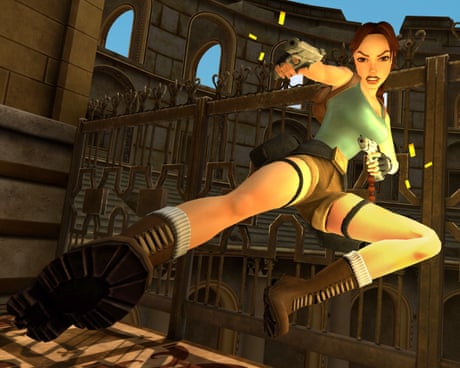
Core Design’s developers recount the grueling creation of Tomb Raider and how its success turned their fortunes around.
How the Project Got Its Start
In the summer of 1994 a developer joined Core Design and was introduced to Toby Gard’s concept sketches for a new game that would become Tomb Raider. Gard already had a title and a mock‑up box cover showing a woman with two pistols.
While working on a golf title called The Scottish Open, the developer was persuaded to pitch Gard’s idea to Core co‑founder Jeremy Heath‑Smith, who approved the creation of a prototype.
Defining the Game’s Core
The team held a few brainstorming sessions and settled on four main pillars: platforming, puzzles, combat and story. Combat was acknowledged as the weakest element, but time constraints prevented major improvements.
From a long list of archaeological sites the team narrowed the setting to four locations: Peru, Greece, Egypt and Atlantis.
Evolution of Lara Croft
Initially Lara was envisioned as a realistic, almost androgynous Latina. The team decided a more stylised movement would work better, so her physique was altered. She became a British mercenary and, with scriptwriter Vicky Arnold’s input, an aristocrat who pursued historical artefacts for fun.
Movement metrics were devised by measuring a hopscotch grid in a car park: Lara measured three paces tall, and each environmental block measured four paces, shaping all gameplay systems.
Development Hell
Delivering the game on schedule was brutal. The developer took only three days of holiday over two years, and both he and Gard stayed in the office until 2 or 3 a.m. daily, including weekends, for about a year. Gard became physically ill from the stress.
Most of the work took place in a large Victorian building on Ashbourne Road in Derby, where the team endured hot summers and freezing winters. The developer was the sole female on the team but felt respected and almost like a sister to colleagues.
Creative Choices and Technical Tricks
Giving Lara pistols allowed the team to showcase her acrobatic abilities. Enemies were often animals; hearing a bat or a bear’s growl felt scarier than a gunshot, emphasizing vulnerability to the wild.
Limited memory and processor speed forced clever tricks to give players the impression of vast, cavernous spaces that were actually many rooms stitched together.
Before level design, the team met to draft rough schematics, drawing on their love of history and myth. Their imagination ran so wild that they “threw a T rex into Peru.”
Publisher Influence and Aftermath
Eidos Interactive saw Lara’s market potential and focused heavily on her image, which the developer feels sometimes went too far with over‑sexualised clothing and poses in marketing.
When sales figures arrived, the impact was life‑changing. Team members who had been financially strapped suddenly found themselves “pulling up in sports cars,” and the developer was able to purchase a house from royalties.
The experience left lasting scars but also a sense of gratitude for having “bottled lightning” and created a game that proved a female lead could succeed against conventional wisdom.