Machado’s Return Raises Stakes for U.S. Strategy in Venezuela
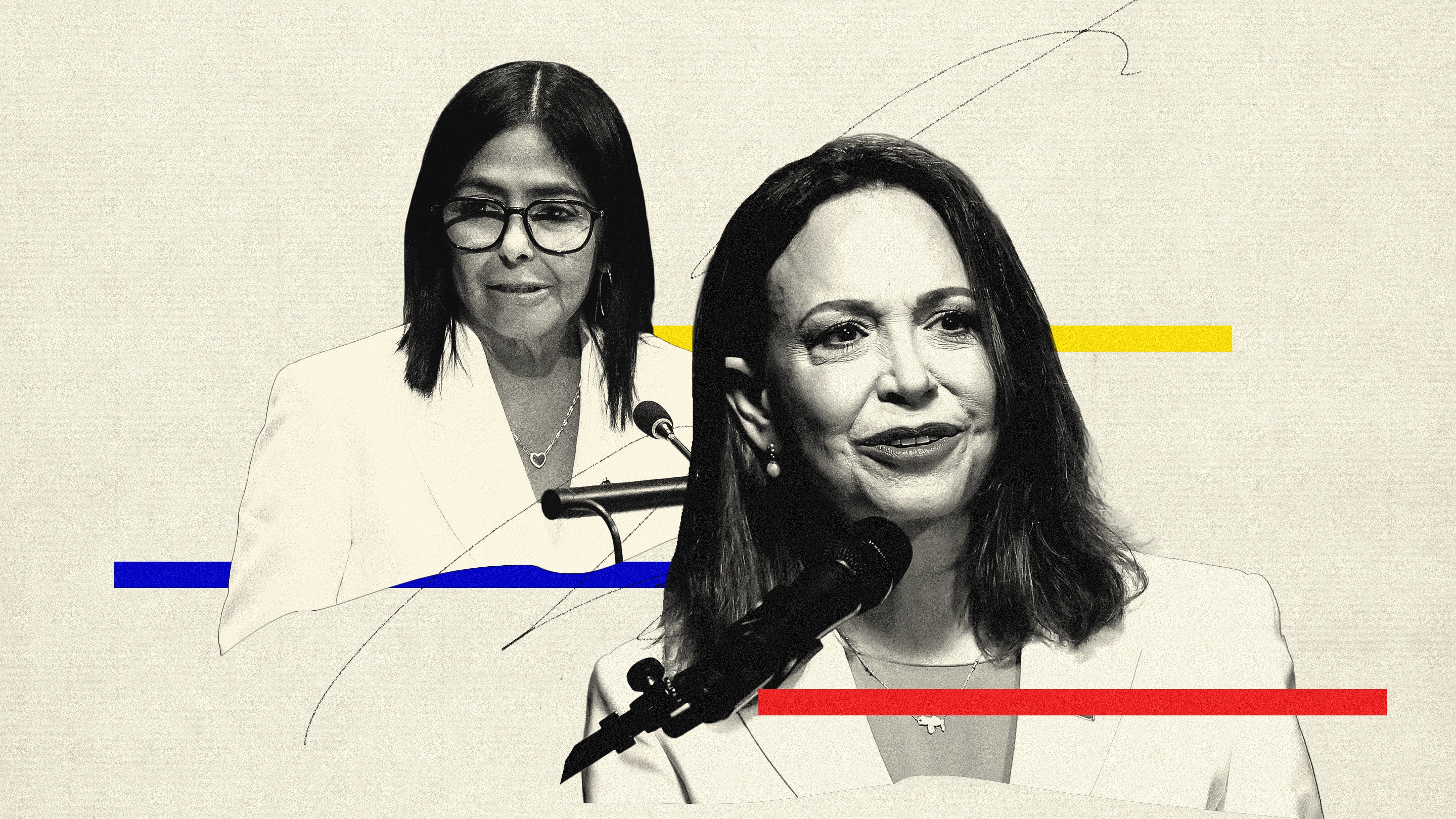
María Corina Machado’s homecoming ignites a clash between her popular opposition movement and the U.S.-backed interim government.
Machado’s First Major Meeting Back in Caracas
Two days after María Corina Machado’s high‑stakes return, she entered her party headquarters, which had been vandalized by regime supporters but was now cleared. About 100 relatives of political prisoners gathered, many holding photos of detained loved ones and wearing shirts that read Libertad. Machado told the crowd, “They persecute the innocent using all the power of the state.” She did not name individuals, but the audience understood she was referring to the current leadership.
Machado emphasized that the detained remain “our absolute priority” and called them “our heroes.” Civil‑society groups estimate at least 400 political prisoners remain in custody. One attendee, Eglis Manaure, held a picture of her husband, Enrique Nauris Parada, detained since 2020, and said she hoped Machado’s justice would reach his jailers.
U.S. Policy Under Trump: A One‑Sided Approach
For the past ten months, the Trump administration has centered its Venezuela policy around Interim President Delcy Rodríguez, describing her as a pliant figure. Through Rodríguez, the United States negotiated an opaque petroleum agreement that President Trump has called “the biggest oil deal in world history” and claimed the U.S. is “taking in hundreds of billions of dollars of oil.” In a January interview with The Atlantic, Trump warned Rodríguez that “if she doesn’t do what’s right, she is going to pay a very big price.”
During this period, the administration worked with remnants of Nicolás Maduro’s regime, arguing that incremental reforms were more likely to endure and that a rapid appearance by Machado could split government institutions and the military.
Machado’s Popularity and the Emerging Rivalry
Machado has quickly become the most popular figure in Venezuelan politics. Supporters have filled highways, plazas and churches to see her, and people have wept in the streets. While Machado met families of political prisoners, Rodríguez held a rally where she danced to popular songs, a performance that many Venezuelans mocked. Rodríguez later derided Machado’s return as a “show.”
Harvard professor Steven Levitsky noted that removing an authoritarian clique is only the first step and that “pushing an authoritarian clique out of power is the hard part,” highlighting the complexity of the transition.
The Trump Administration’s Three‑Phase Plan
A senior State Department official explained that, under the administration’s three‑phase roadmap for a democratic return, Rodríguez would need to declare a “permanent vacancy in the presidency” once electoral reforms are completed. This declaration would trigger a six‑month period before new elections could be held. Analysts suggest that this timeline could allow a Machado presidency by mid‑ to late 2027, at the earliest.
Paul Angelo, a Latin America expert, said Machado is operating on a very tight timeline and that while she enjoys broad popular support, her role as a unifying opposition leader may have limits.
Unsettled Futures: Justice, the Oil Deal, and Rodríguez’s Fate
Neither the United States nor Machado’s team has outlined a post‑election plan for Rodríguez and other members of the Maduro regime. Options discussed include offering safe haven, granting amnesty, or allowing prosecutions. Martha Tineo, co‑founder of Justicia, Encuentro y Perdón, emphasized that “the Venezuelan courts themselves… can try and convict those responsible for human‑rights abuses,” and that no political agreement should supersede justice.
If Rodríguez remains in power through the elections, she would likely seek assurances that she would not face jail time afterward, a concern shared by other senior officials of the regime who have been linked to documented human‑rights abuses.
Machado’s supporters view impunity as unacceptable. The United States now faces the task of reconciling these demands with the broader transition, as many involved in reforming Venezuela’s judicial and electoral systems see Washington as holding the final say.
Implications for the Trump Oil Agreement
Machado’s return also casts uncertainty on the oil deal negotiated with Rodríguez. Most of her supporters consider the agreement unconstitutional and anticipate that an independent judiciary could challenge it. At her first press conference in Caracas, Machado said the deal “does not reflect the levels of transparency that Venezuelan society wants.”
Secretary of State Marco Rubio initially cautioned Machado against returning after the June earthquake, fearing it could disrupt aid delivery. Weeks later, Rubio said the administration warned Rodríguez’s government that Machado had a right to return, stating, We spoke to the interim authorities and just said, ‘Look, our expectation is that she’s a Venezuelan; she belongs in her country.’ She should be allowed to return, and she should be allowed to return unperturbed.
The evolving dynamics between Machado’s opposition movement and the U.S.-backed interim government suggest that the Trump administration’s strategic calculations in Venezuela are entering a far more complex phase.