Maryland resident works to restore vanished Chesapeake oyster reefs
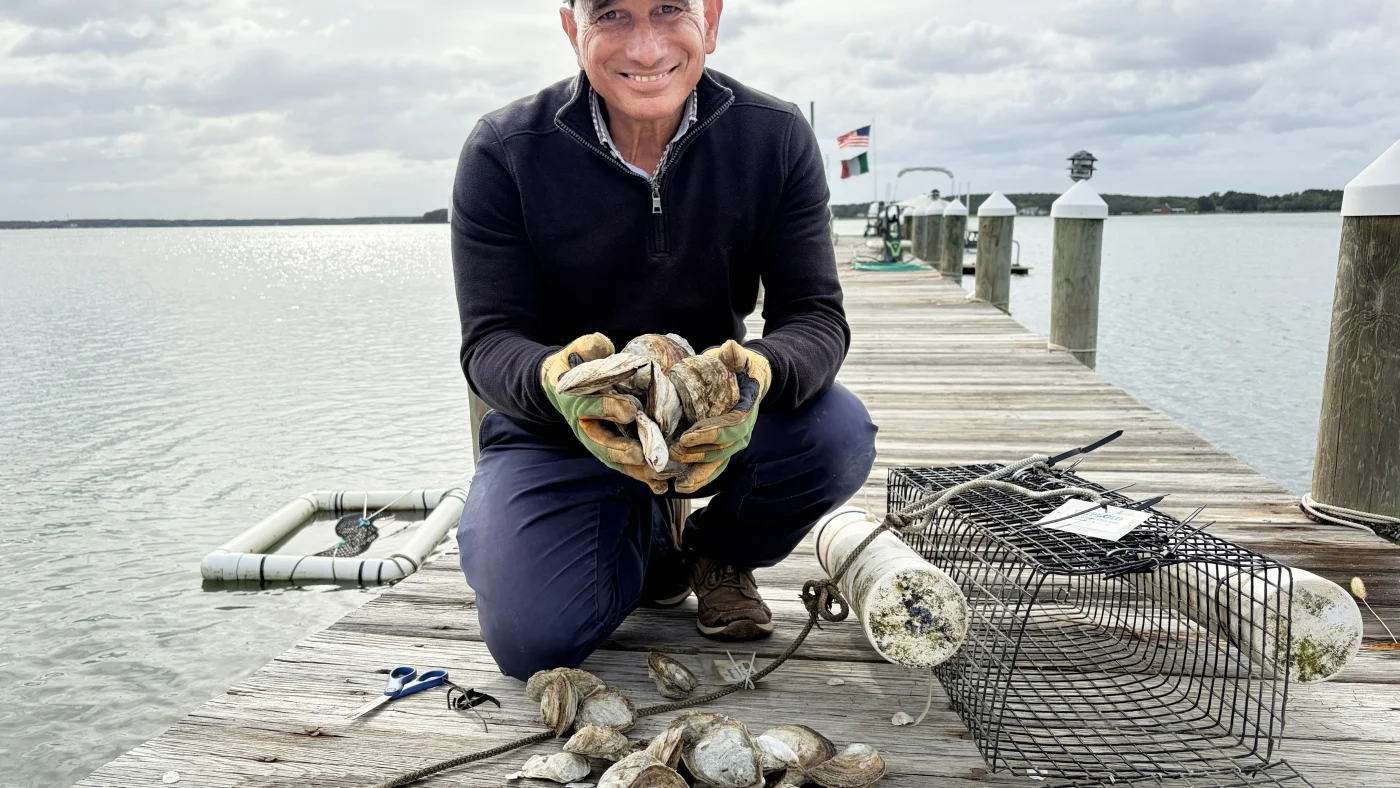
A photographer‑turned‑conservationist is hauling fresh‑grown oysters onto his Kent Island pier in hopes of reviving the bay’s depleted reefs.
From a photographer’s lens to a reef‑restorer’s pier
John Consoli stands on a pier at the southern tip of Kent Island, Maryland, pulling a pillow‑sized mesh net from the Chesapeake Bay. He says the net is full of brand‑new oysters that have grown from almost weightless shells in just three months. After hauling the net onto the pier, Consoli smiles, “I think I’m more enthusiastic about something that’s like a rock than anybody else could possibly be.”
Why oysters matter
Each adult oyster can filter up to 50 gallons of water per day, a process that clarifies the bay and supports healthier seagrass beds. Cleaner water benefits crabs and other organisms, according to Consoli. The shells also create complex habitats; “a lot of small fish and crabs live and eat amongst them and hide,” he explains, adding that he once found a seahorse among the shells—a first for him.
Historical collapse and modest recovery
Oyster reefs once dominated the Chesapeake’s coastal and estuarine zones, but overharvesting reduced their numbers by over 99% by 2011, according to one estimate. The loss contributed to poorer water quality and less habitat for other species. Oyster farming has expanded in recent years despite environmental and disease challenges, says Ryan Carnegie, a biologist at the Virginia Institute of Marine Science. Carnegie notes that wild oysters have also made a partial comeback thanks to better management and restoration investments, though Elizabeth North, a fisheries oceanographer at the University of Maryland Center for Environmental Science, cautions that “current oyster populations are likely still a fraction of these historic populations.”
Consoli’s hands‑on approach
Consoli’s goal is to act as a caretaker, “stocking the bay with ever more oysters and looking after their wellbeing.” He places the oysters just below the surface where nutrients are concentrated, aiming for rapid growth. While his oysters are not intended for consumption, he acknowledges that a cleaner bay improves habitat for commercially harvested species.
How he got involved
Originally a professional photographer at the University of Maryland, Consoli was photographing campus oyster‑research projects when he encountered the restoration effort. “Seeing great minds coming together to solve problems showed to me that there’s a real need here,” he says.
Engineering hurdles in oyster restoration
Miao Yui, a mechanical engineer at the University of Maryland, points out two persistent challenges despite recent modest gains in oyster abundance. First, “knowing where to plant the babies” is difficult because young oysters must settle on a hard substrate; otherwise they may be dropped into mud and die. Second, “figuring out where and when to harvest the adult oysters” is “the biggest challenge,” since visibility a few feet below the water is limited. These issues make dredging for restoration inefficient and potentially damaging to the seabed.
Looking ahead
Consoli’s hands‑on work illustrates one grassroots response to a centuries‑long decline. While oyster farming and selective wild‑stock recovery are underway, the bay’s oyster populations remain far below historic levels, and technical obstacles persist. Whether individual efforts like Consoli’s can scale to meaningful ecosystem recovery remains to be seen.