NASA Issues New Call for Commercial Ideas to Rescue Hubble Telescope
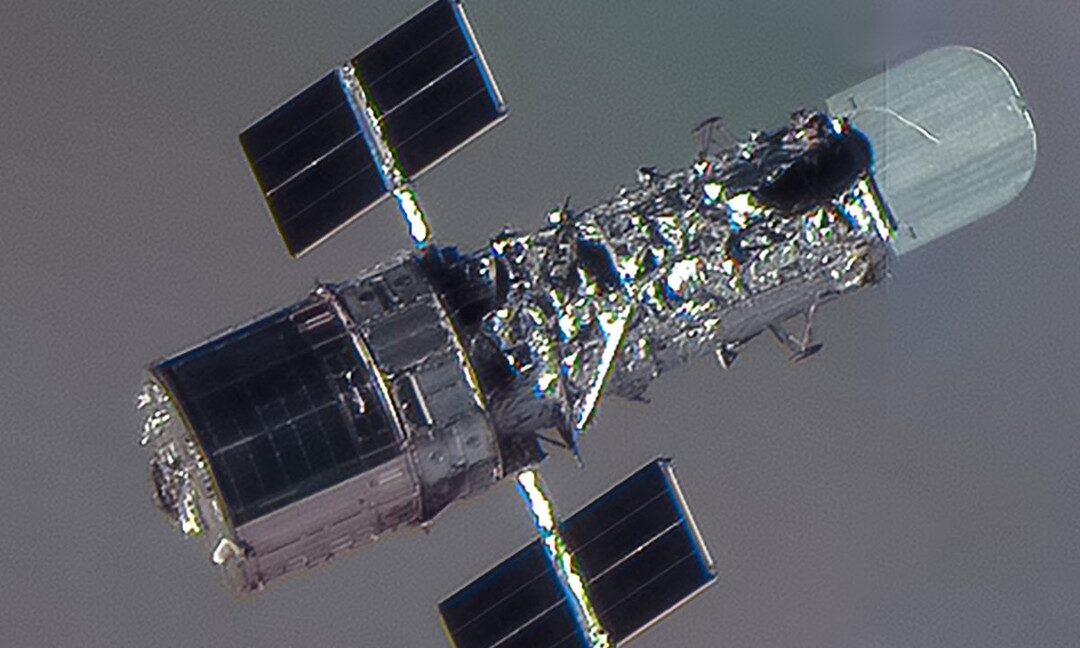
NASA has opened a fresh request for information, seeking commercial proposals to boost, service, or safely deorbit the aging Hubble Space Telescope.
Background on Hubble’s declining orbit
The Hubble Space Telescope has been orbiting Earth for 36 years, but without onboard propulsion it has been losing altitude since the last shuttle‑based servicing mission in 2009. Orbital dynamicists estimate that, without intervention, Hubble will reenter the atmosphere in the early‑to‑mid‑2030s, likely around 2033 or 2034.
After a 2002 reboost to 362 miles (583 km), Hubble has drifted down to roughly 292 miles (470 km). Raising the telescope to the NASA‑specified minimum of 373 miles (600 km) could extend its orbital life by about 25 years.
NASA’s new Request For Information
On Thursday, NASA released a Request For Information (RFI) inviting commercial firms to submit concepts for reboosting, servicing, or conducting a controlled disposal of Hubble. Responses must be filed by November 30.
The RFI states that any proposed mission must not damage Hubble and must be executable by 2032. The contractor would be expected to provide the launch vehicle, servicing spacecraft, mission operations, and crew if applicable.
NASA is not committing to purchase a rescue mission at this stage; it simply wants to understand which companies could realistically reach Hubble before it decays, what the costs might be, and what capabilities they possess.
Previous outreach and proposals
In 2022, NASA issued an earlier RFI and received eight responses, including a joint robotic reboost concept from Astroscale and Momentus.
That same year, billionaire astronaut Jared Isaacman approached NASA with a plan for a SpaceX‑Dragon crewed mission that would have reboosted Hubble by at least 30 miles (50 km) and potentially attached a rescue pod with new gyroscopes.
NASA reviewed those submissions in 2024 and decided not to pursue a reboost, with Mark Clampin describing the Isaacman‑SpaceX ideas as “notional concepts.”
Industry developments that could change the equation
Since the earlier RFI, the satellite‑servicing sector has advanced. Northrop Grumman launched a sophisticated robotic servicing satellite in partnership with DARPA earlier this year. Startups such as Astroscale and Starfish Space have secured contracts for servicing and refueling demonstrations with the US Space Force and NASA.
These developments suggest that a commercial entity might now have the technical maturity to meet NASA’s 2032 timeline, provided sufficient resources are allocated.
Lessons from a recent rescue attempt
NASA’s recent effort to rescue the smaller Swift telescope offers a precedent. The agency awarded a $30 million contract to Katalyst Space Technologies, giving the startup nine months to develop a mission that would rendezvous with Swift and raise its orbit. Katalyst succeeded in building and launching a rescue satellite, reaching within about 6 miles (10 km) of Swift before ground teams halted further approach due to technical issues.
The Swift rescue demonstrated that a servicing mission need not cost billions, though Hubble’s higher value and complexity would likely require a larger budget and longer schedule.
Funding status and next steps
Currently, NASA has no dedicated funding earmarked for a Hubble reboost or servicing mission. The agency’s immediate goal is to collect information on potential contractors, cost estimates, and technical feasibility through the RFI process.
Should the agency later decide to move forward, it would need to allocate sufficient resources and select a partner capable of delivering a safe, effective mission before Hubble’s orbit decays irreversibly.
In the meantime, Hubble continues to operate at its lower altitude, providing valuable data while the space community watches for a viable rescue solution.