Northern Ireland’s Landscape Shaped C.S. Lewis’s Vision of Narnia
A walk through Belfast and the Mournes reveals the real‑world sites that inspired the beloved Chronicles of Narnia.
From Belfast Streets to Narnian Murals
East Belfast’s working‑class walls are now dotted with murals that celebrate author C.S. Lewis alongside more contentious political imagery. The city’s gable walls, once dominated by paramilitary symbols, have begun to feature the magical beasts of Narnia.
Lewis’s Birthplace and Public Tributes
Lewis was born in 1898 in a terrace house on Dundela that has since been replaced by flats. Nearby, the Holywood Arches neighbourhood hosts CS Lewis Square, a walking trail with metal sculptures of Mr and Mrs Beaver, Mr Tumnus and other characters, anchored by a towering Aslan on a circular mound.
A Lion’s Legacy at St Mark’s
St Mark’s church on Holywood Road, about a fifteen‑minute walk from the square, safeguards a replica of the brass lion’s‑head doorknob that once adorned the front door of the rectory where Lewis’s grandfather, Rev Thomas Hamilton, ministered for 13 years. The replica draws thousands of Lewis pilgrims each year.
Little Lea: The Home That Became Narnia
In 1905 the Lewis family moved to a large red‑brick house on Leafy Circular Road, known as Little Lea. Though privately owned, the house remains visible from the iron gates at the end of the drive. Lewis described it in his autobiography Surprised By Joy as “less like a house than a city,” recalling long corridors, empty sunlit rooms and solitary attic explorations.
Little Lea appears in the opening two Narnia books: an attic scene in The Magician’s Nephew and a game of hide‑and‑seek in The Lion, the Witch and the Wardrobe that leads children to the magical world.
Hills, Glens and the Mourne Inspiration
From Little Lea, the Lewis brothers could trek for hours into the hills between Belfast and Strangford Lough. The Belmont Road climbs out of the city toward high ground that overlooks Belfast, Bangor and Newtownards. While Lewis never named the exact spot, the crags of Whitespots Country Park above Newtownards match his description of a “different world” looking south with a little east, the “plain of Down” and the Mourne Mountains beyond.
Lewis once told his brother Warnie that the view from the Mournes above Rostrevor looking down over Carlingford Lough was his idea of Narnia. That quote is now stencilled on a bench in Kilbroney Forest Park, inviting visitors to sit and imagine a “giant might raise his head over the next ridge.”
Coastal Castles and Cair Paravel Debate
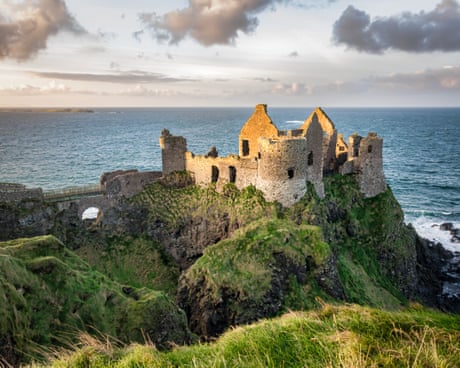
Rostrevor lies an hour’s drive south of Belfast; an hour north leads to the coast where Lewis holidayed with his mother. Scholars argue whether the ruins of Dunluce Castle east of Portrush or Downhill Demesne near Castlerock, with its Mussenden Temple, inspired the Narnian capital Cair Paravel. The latter’s “great star resting on the seashore” description aligns closely with Lewis’s essay imagery.
Legacy Amid Modern Murals
Lewis wrote his autobiography while completing the seven Chronicles of Narnia, suggesting that the memories of Belfast’s streets and the surrounding countryside seeped into his fictional world. Today, the juxtaposition of Narnian murals with Belfast’s political art creates a unique visual dialogue, hinting that, as in the books, “good will win in the end.”
Exploring these sites offers a tangible link between the real landscapes of Northern Ireland and the timeless fantasy that continues to captivate readers worldwide.