Serbia’s student movement forces historic power shift as Vučić concedes defeat
After weeks of intimidation and cyber‑attacks, Serbian students secured a decisive election win that compelled Aleksandar Vučić to accept loss.
Election night turned into a test of authoritarian resilience
When Serbian polling stations closed on Sunday evening, riot police were positioned around the presidential palace in Belgrade. The atmosphere was charged with fear of massive fraud, a refusal to recognise defeat, or even outright violence after nearly 15 years of Aleksandar Vučić’s increasingly authoritarian rule.
Personal stakes for civil‑society actors
The author, co‑founder of an annual security and foreign‑policy conference on the Western Balkans and member of the international advisory committee of the Belgrade Centre for Security Policy, describes how ordinary civil‑society work became a high‑risk activity under Vučić. Over the past two years the organisation endured cyber‑attacks allegedly linked to Russian intelligence, spyware attempts and a sustained vilification campaign by pro‑regime media. One breach exposed 28,000 hacked email exchanges, while Russian‑style “foreign agents” legislation loomed over the sector.
Escalating repression of dissent
Journalists and activists reported homes set on fire; detained students described beatings, naked humiliation of women in police stations, and imprisonment for exercising democratic rights. The “Novi Sad 12” – a group of students and activists prosecuted after the November 2024 railway station canopy collapse that killed 16 people – faced politically motivated charges, with six forced into exile and the remaining six subjected to imprisonment and house arrest.
Students break the impossible barrier
Against this backdrop, the student‑backed list secured an overwhelming victory on Sunday. Vučić ultimately conceded defeat, a move the author characterises as “extraordinary” given his long‑standing concentration of power.
Why Vučić stepped back
The article questions whether popular resistance or international pressure drove the concession, but highlights a concrete factor: uncertainty over the loyalty of the security apparatus. Days before the election, hundreds of current and former police and intelligence officials, including former security leaders, signed an appeal urging colleagues to uphold the constitution rather than follow unlawful political orders. This appeal suggested Vučić could not rely on the entire security establishment to enforce his hold on power.
What the victory represents
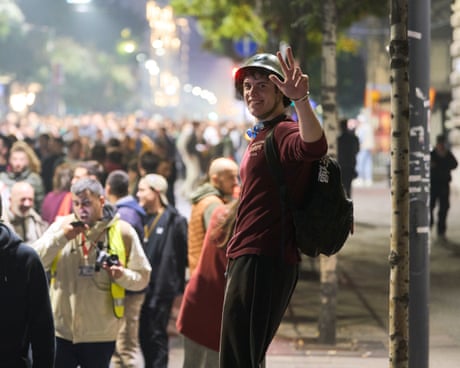
The author frames the outcome as a near‑miracle in a system designed to make losing impossible. The win is attributed not only to the students but also to “hundreds of thousands who marched, organised and endured intimidation.” The movement originated from grief over the 16 lives lost in Novi Sad and evolved into a challenge to state capture.
Long‑term implications
For almost two years, the students worked to dismantle the regime’s most potent weapon: the belief that resistance was futile, that everyone could be bought, and that political change was impossible. The author warns that European leaders who previously courted the Vučić regime must now offer a clear future within the EU to this “reborn democracy.”