SpaceX Completes Static Fires of Starship Upper Stage Ahead of Flight 15
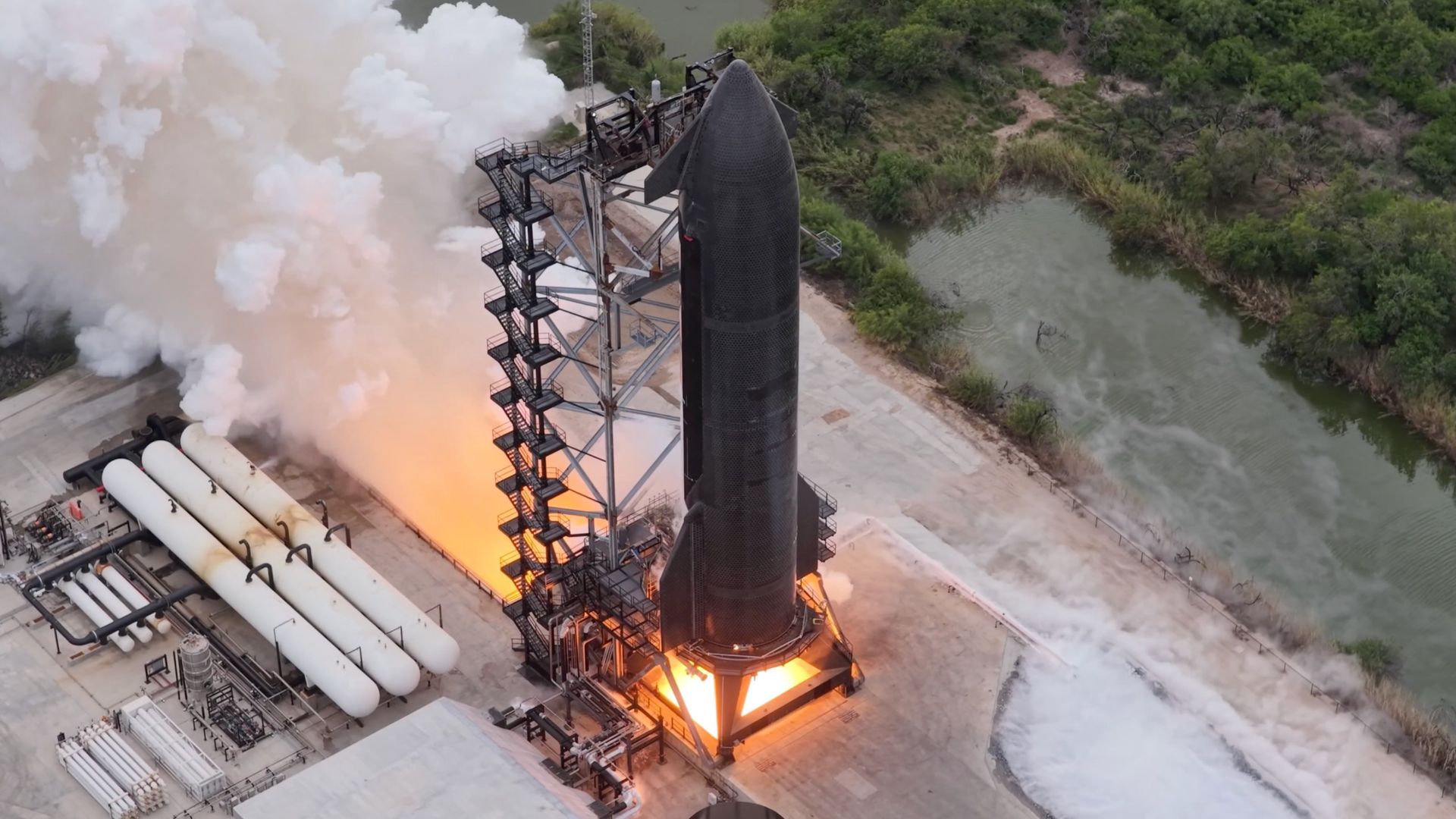
SpaceX finished full‑duration static‑fire tests of Ship 42, clearing another hurdle before the planned November Flight 15.
Exciting progress! SpaceX announced on Oct. 28 that its Starship upper stage, designated Ship 42, has completed two static‑fire tests.
On Oct. 26 the vehicle ignited a single Raptor engine to simulate a deorbit burn, while remaining tethered to the ground.
Then, on Oct. 27, Ship 42 executed a full‑duration, six‑engine static fire, as shown in video shared on the company’s X account.
These tests follow a successful 33‑engine static fire of Booster 22, the Super Heavy first stage slated for the same flight.
SpaceX founder and CEO Elon Musk has said Flight 15 is targeted for sometime in November, provided regulatory approval is secured.
The upcoming launch will attempt to catch both the Starship upper stage and the Super Heavy booster using the launch‑tower “chopstick” arms at Starbase in South Texas.
To date, Super Heavy has been snagged on three previous Starship test flights, but this will be the first attempt to capture the Ship.
Successful double‑catch operations are intended to become standard on operational Starship missions, reducing turnaround time and boosting launch cadence.
Starship’s fully reusable design contrasts with SpaceX’s Falcon 9 and Falcon Heavy rockets, whose upper stages are expendable.
Flight 14, which occurred on Sept. 28, marked the first orbital flight of the megarocket and delivered 26 Starlink V3 satellites, part of a planned 100,000‑satellite broadband constellation.
Future Starship missions are also expected to support the ambitious Starmind constellation, envisioned to host up to one million AI data‑center satellites.
With static‑fire milestones checked off, SpaceX appears on schedule for the highly anticipated Flight 15.