The BBC’s “Political Traitors” Exposes How Contestants Slip In and Out of Loyalty
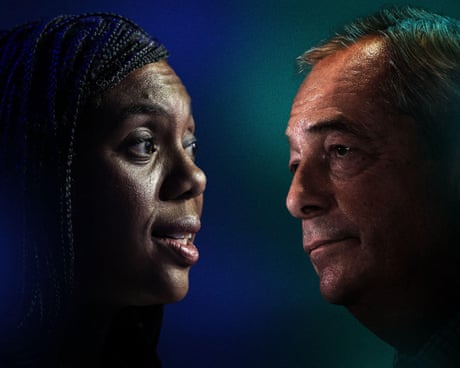
A look inside the chaotic, ever‑changing world of the UK version of “Political Traitors,” where players juggle budget tasks, betrayals and baffling strategies.
The BBC’s special‑budget edition of Political Traitors turns Westminster’s usual theatrics into a game where politicians must craft tiny, crowd‑pleasing measures while balancing invisible tax rises. The premise is simple: players do not see the whole picture, while viewers at home watch the hidden machinations unfold.
Players and Their Ever‑Changing Loyalties
Contestants such as John and Andy loudly proclaim that they have faithfully met their “fiscal rules” in the third year of the forecasts, even though the narrator notes that the claim is “entirely meaningless.” Former participants, like Liz, who appeared briefly in 2022, were described as “a sensation of chaotic energy” and were deemed “someone who shouldn’t have been allowed to take part” after she was last heard outlining a plan to colonise Mars.
Current player Kemi insists she is a “masterly player on course for triumph,” even as she explains her “brilliant inquisitions at the roundtable” after Keir was banished earlier this year. The show’s narrative paints Keir as “100% faithful, … 1000% loser,” a paradox that underscores the fluid nature of loyalty on the series.
Strategic Blind Spots and Hidden Information
The information gap between contestants and the audience fuels the show’s tension. Viewers can see opinion polls and byelection results that players cannot, making it easy to spot contradictions. For example, Nigel has “seemingly revealed himself to be a traitor,” while his close ally Nathan was “actually unmasked as one,” yet no one on the set can piece the clues together.
Some contestants adopt a low‑profile approach. Ed D has been so successful at flying “below the radar” that many viewers have forgotten he exists, even after his triumph in the water‑slide task.
Daily Drama and Bizarre Tasks
Each morning the players gather for a heated breakfast‑TV discussion, insisting that recent events prove their theories right. The show’s “conference” task from last month forced contestants to hold a severed teammate’s head and mimic its distinctive cry; Kemi chose to imitate “Maggie,” while Andy claimed he could do a “mean Harold” and rejected copying “Tony,” a successful former player.
In a 2022 episode, almost all players quit in an attempt to force Boris to admit he was lying, yet he retained support from the loyal Nadine. These moments illustrate how the game’s drama often mirrors real‑world political theatrics.
International Versions and the Host’s Role
The format has been sold worldwide, with each market adding its own twist: the French edition uses a runoff vote, the Israeli version is described as “so complicated that no one understands anything about it except that somehow Bibi keeps winning,” and the American version is “louder, brasher and far more expensive,” populated by “idiots who have failed… to identify their obvious traitor.”
One constant on the British series is host Lindsay, whose “ridiculous outfits” and catchphrases—“Order! ORDER!” and “Mr Holden, I think you need to leave”—have made him “fast becoming a national treasure.” He ends each roundtable with the line that “the time for talk is over,” though the article jokes that “the time for talk never ends.”
Overall, the show offers a window into how participants construct narratives that are objectively nonsense, revealing the psychological gymnastics behind political performance, all while delivering the entertainment of a reality‑TV spectacle.





