ULA’s Vulcan Rocket Set for Return‑to‑Flight on Friday the 13th
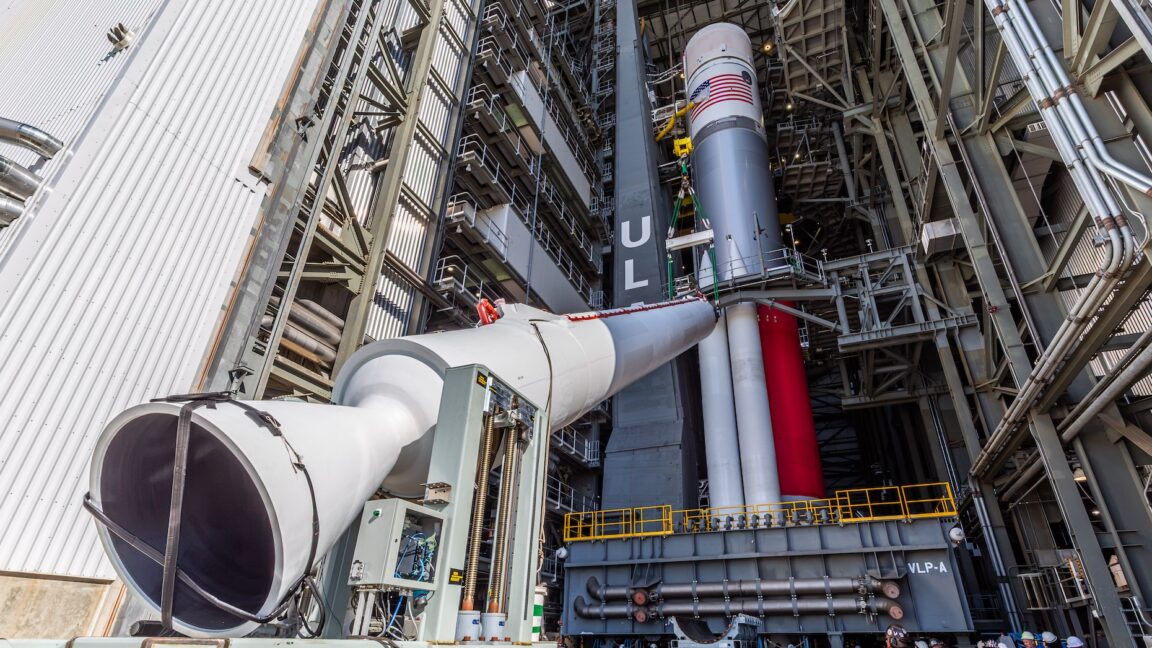
United Launch Alliance plans to launch 40 Amazon Leo satellites on November 13, marking the first Vulcan flight with six solid boosters.
Vulcan’s First Full‑Boost Configuration
United Launch Alliance announced Wednesday that its Vulcan rocket will attempt a return‑to‑flight on November 13, nine months after a solid rocket booster anomaly disrupted its 2026 launch schedule.
This mission will be the first time Vulcan flies with the full set of six solid rocket boosters, a configuration that had not been used on earlier flights.
Exciting times for the launch community!
Amazon Leo Satellite Deployment
The upcoming launch will carry 40 satellites destined for the Amazon Leo broadband constellation. This is the first of 38 Vulcan flights that Amazon has reserved to populate its network.
The launch is slated from Cape Canaveral Space Force Station, Florida, pending range approval.
Background on Recent Setbacks
Vulcan’s recent history includes nozzle failures on the solid rocket boosters during two of its first four missions, the most recent occurring in February. Although the rocket completed its missions, the incidents caused the US Space Force, Vulcan’s primary customer, to lose confidence.
The Space Force certified Vulcan for national‑security launches in 2025 and flew two missions before the February incident led to a grounding.
Engineering Response
In a statement, ULA said engineers have made significant progress in understanding the February booster anomaly and have identified several potential contributors. Mitigations have been applied to the nozzle design and related processes.
“To support our customers, this upcoming launch will utilize the improved nozzle design, and additional testing and analysis will continue in parallel with the mission,” ULA said.
“By flying the improved design, ULA gains valuable flight data that validates these improvements and is the most beneficial path in support of all our customers.”
Investigation Details
Neither ULA nor Northrop Grumman, the booster manufacturer, disclosed the definitive cause of the February nozzle malfunction. Investigators had previously linked the first 2024 occurrence to a manufacturing defect in an insulator meant to shield the nozzle’s metallic structure from superheated exhaust.
Impact on Space Force Launch Plans
The Space Force relies on ULA, a joint venture of Boeing and Lockheed Martin, for roughly half of its major launches through the early 2030s, covering communications, navigation, missile warning, and surveillance satellites.
Because of Vulcan’s delays, six missions were shifted to SpaceX’s Falcon 9 and Falcon Heavy rockets to keep schedules on track. These swaps included three GPS satellites and a large strategic missile warning satellite, among others.
Despite the reassignments, the total number of missions awarded to ULA and SpaceX remains unchanged, and the swaps were coordinated with both launch providers.
Flexibility from both launch partners is helping the warfighter get capabilities when needed.
Future Outlook
Brig. Gen. Eric Zarybnisky, chief rocket buyer at Space Systems Command, said the military wants data from commercial Vulcan flights before clearing the vehicle for additional national‑security missions.
At least two Amazon Leo missions are scheduled on Vulcan before it undertakes another national‑security launch, potentially early next year.
The November 13 flight will therefore serve as a critical data point for restoring confidence in Vulcan’s performance.