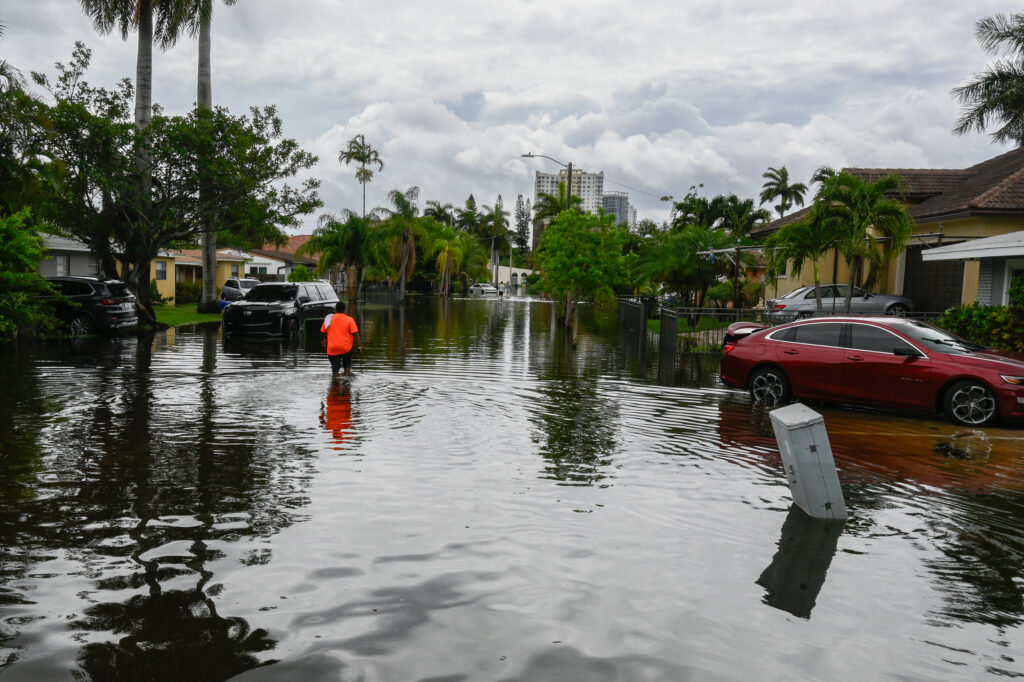
Hurricane Helene’s Aftermath Shapes North Carolina Midterms

Voters in western North Carolina are still feeling the sting of Hurricane Helene as they head to the polls.
Early Voting Amid Flood Talk
On October 19, residents gathered at the Haywood County Public Library in Canton, North Carolina, to cast early ballots while still discussing the lingering effects of Hurricane Helene.
Sandra Moody, a straight‑ticket Republican voter, laughed and said, “Well, we’re not weather people…these floods that keep coming — they’re supposed to be 500‑year floods. You’re like, ‘What is going on?’”
Recovery Still Far From Complete
Helene caused nearly $60 billion in damage and recovery needs. About $10 billion in federal assistance has been provided so far. After accounting for state funding and insurance payments, the state estimates the unmet need at roughly $41 billion.
Public Sentiment on the Response
A poll commissioned by WRAL and WSOC found that half of all North Carolinians are dissatisfied with the government’s response, compared with 37 percent who are satisfied. In western North Carolina, only 5 percent said they are “very satisfied” with how officials are handling things.
Midterm Races Tied to Recovery
The 11th Congressional District, which includes much of the area hardest hit by Helene, is now viewed as a toss‑up. In the state Senate race, Democrat Roy Cooper—who was governor when the storm hit—holds a double‑digit lead over Republican Michael Whatley, the candidate Trump endorsed as his point person on the recovery.
In 2024, Republicans criticized the Biden administration’s disaster response. Two years later, Republicans control the White House, Congress, and the federal agencies overseeing the recovery.
Political Maneuvering and Aid
President Trump joked that he would not send additional aid to North Carolina if Whatley lost, and he has linked disaster assistance to elections elsewhere, such as announcing $17.9 million for Wisconsin while promoting a Republican gubernatorial candidate.
Vice President JD Vance promised $858 million to North Carolina during a recent campaign stop near Asheville.
The White House denies that disaster decisions are politically motivated, but the timing of aid announcements raises questions about the role of recovery in the midterms.
NC‑11: A District in Flux
NC‑11 covers 16 rural, mountainous counties and the Democratic stronghold of Asheville. Trump carried the district by 9.5 points in 2024, and the seat has been held by three successive Republicans: Mark Meadows, Madison Cawthorn, and Chuck Edwards.
Republican Jennifer Balkcom entered the race three months ago after Edwards withdrew and is now even with Democrat Jamie Ager. A pro‑Trump political action committee recently canceled more than $1 million in TV ads supporting Balkcom, leaving the race in a toss‑up status.
Voters’ Climate Concerns
Maggie Panther, a Democrat voting early in Canton, said the storm reinforced her worries about climate change. “I hate to sound totally partisan, but I know that there’s one party that’s trying to do something about climate change, and there’s one party that is denying it,” she said, adding that she will vote accordingly.
Candidate Focus on Recovery
Jamie Ager, a fourth‑generation farmer, has centered his campaign on the economic impact of Helene and the many residents still awaiting FEMA reimbursement and struggling to rebuild.
“We were trying to do everything we could to get back up on our feet here at the farm and everywhere else,” Ager said. “As time kept dragging on and recovery was clearly insufficient, we were hearing from neighbors and folks in the community about their frustrations.”
As North Carolinians head to the polls, the shadow of Hurricane Helene looms large over both personal decisions and the political landscape.